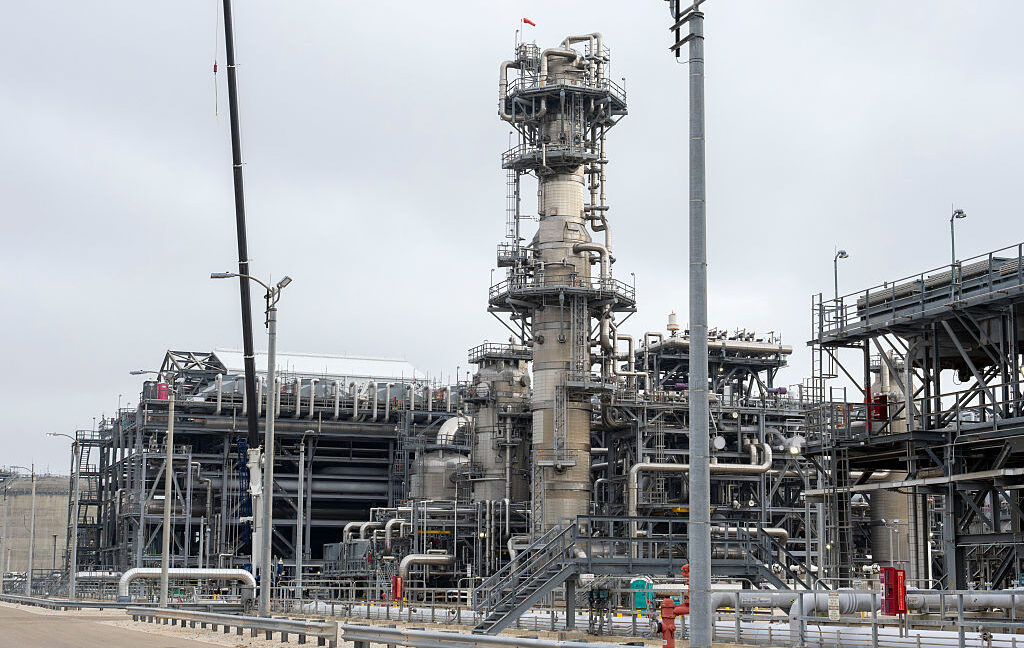
The Trump administration has secured a voluntary pledge from seven major AI and cloud companies to directly fund new power generation and grid infrastructure for their data centers, shifting a critical cost burden away from utility ratepayers. This move represents a significant political intervention into the escalating conflict between explosive AI-driven energy demand and the strained U.S. electrical grid, though its effectiveness hinges on voluntary compliance and overcoming deep-seated supply chain and economic hurdles.
Key Takeaways
- Seven tech giants—Amazon, Google, Meta, Microsoft, OpenAI, Oracle, and xAI—have signed the voluntary Ratepayer Protection Pledge.
- The core commitment requires companies to pay for new power generation and transmission infrastructure needed for their future data centers, regardless of whether their facilities ultimately consume that power.
- The agreement lacks any formal enforcement mechanism and faces practical challenges with hardware supply chains and economic incentives.
- The pledge is a direct response to concerns that surging AI data center demand is driving up electricity costs for residential and commercial utility customers.
The Mechanics of the Ratepayer Protection Pledge
The pledge, outlined in a White House fact sheet, is built on five points, with the first three constituting its operational core. Signatory companies commit to financing the new generating capacity required for their additional data centers, either by constructing it themselves or by paying for its development as part of a new or expanded power plant. Critically, they also agree to fund any necessary transmission infrastructure to connect these new data centers and power sources to the broader grid. The most financially burdensome clause may be the agreement to cover these costs even if the generated power is not ultimately consumed by their facilities, a provision designed to ensure grid stability and capacity for other users.
This structure explicitly aims to prevent the massive capital costs of grid expansion from being socialized across all utility customers through rate hikes. By having the direct beneficiaries of the power—the AI and cloud companies—foot the bill, the administration argues it protects the "ratepayer," a potent political framing. However, the document remains a non-binding pledge without stipulated penalties for non-compliance, relying entirely on corporate goodwill and public pressure.
Industry Context & Analysis
This pledge is a political acknowledgment of an acute physical bottleneck: the U.S. power grid cannot support unfettered AI growth. Training and inference for large language models (LLMs) are notoriously energy-intensive. For context, a single query to a model like OpenAI's GPT-4 can consume nearly ten times the power of a Google search, and training runs for frontier models require gigawatt-scale power commitments over weeks or months. The Electric Power Research Institute (EPRI) estimates that data centers could consume up to 9% of total U.S. electricity by 2030, a near-tripling from 2022 levels, driven largely by AI.
The pledge attempts to reframe a market failure. Traditionally, utilities build capacity based on projected demand and recover costs from all customers. The unprecedented, concentrated, and unpredictable demand from a handful of tech firms disrupts this model, risking soaring costs for others. Unlike previous corporate sustainability pledges, like the RE100 commitment to 100% renewable energy, this agreement focuses on fiscal responsibility for grid infrastructure, not carbon accounting. It also stands in contrast to the approach of companies like Tesla, which often work directly with utilities and regulators on tailored rate structures for their Gigafactories, rather than making broad public commitments.
The practical hurdles are immense. The companies are pledging to finance assets—like natural gas plants, transformers, and high-voltage lines—that face severe supply chain constraints and multi-year permitting timelines. Major electrical components like power transformers have lead times exceeding two years. Furthermore, the economics are questionable. A company like Microsoft, which is aggressively building AI infrastructure, might see strategic value in controlling its power destiny. However, a smaller signatory or a company placing a single, smaller data center may find the cost of building a dedicated transmission line prohibitive, creating a potential competitive disadvantage against non-signatory rivals or legacy industries.
What This Means Going Forward
The immediate beneficiaries are public utilities and their regulators, who gain political cover and a promise of private capital to address grid strain. If upheld, the pledge could prevent politically toxic electricity rate increases for households in regions with major data center build-outs, such as Northern Virginia, which already hosts the world's largest concentration of data centers.
For the tech industry, the pledge signals a new era of tangible infrastructure responsibility. Watch for two key developments: whether these companies begin announcing specific power generation projects tied to data center campuses, and if any major cloud or AI player, such as Cloudflare or a large enterprise AI vendor, refuses to sign, citing competitive concerns. The agreement also intensifies the race for more energy-efficient AI hardware, from NVIDIA's next-generation Blackwell GPUs to specialized inference chips, as reducing direct power consumption becomes even more financially critical.
Long-term, the pledge's voluntary nature is its greatest weakness. Its success depends on sustained political pressure and the signatories' fear of reputational damage. It may also spur more permanent regulatory solutions, such as FERC-approved tariff structures that formally assign infrastructure costs to large, "load-growth" customers. The Ratepayer Protection Pledge is less a solution and more a high-profile admission that the AI revolution's next great challenge isn't in the code, but in the concrete, steel, and copper of the century-old electrical grid.