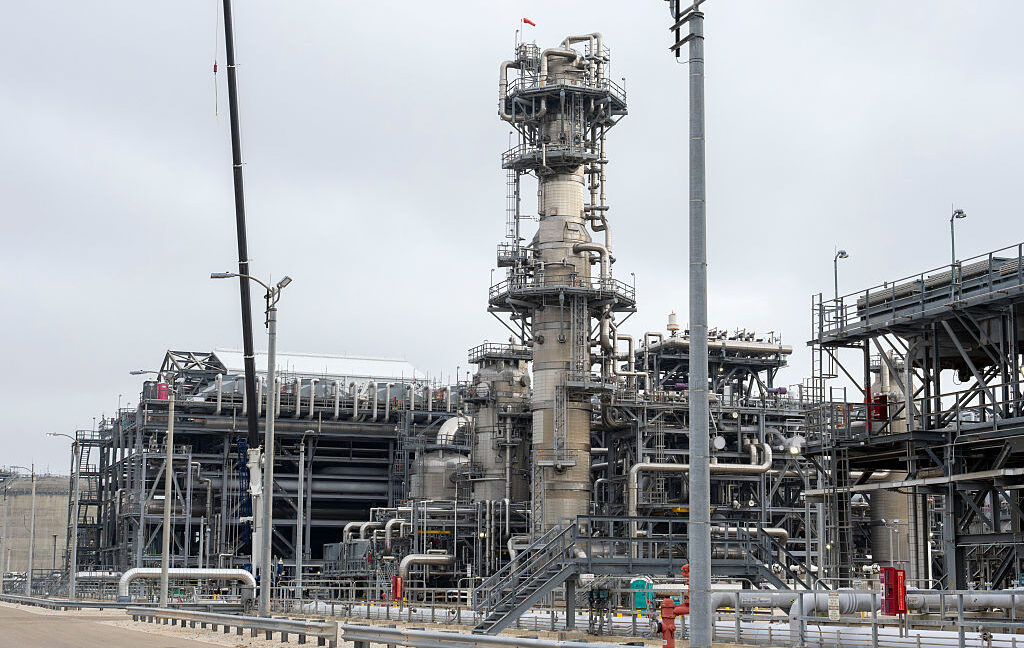
The Trump administration has secured a voluntary pledge from seven major tech and AI companies to directly fund new power generation and grid infrastructure for their data centers, a move aimed at addressing the sector's soaring energy demands. While framed as a solution to prevent utility cost spikes for ordinary ratepayers, the non-binding agreement sidesteps critical enforcement, supply chain, and market realities, raising questions about its practical impact on the nation's strained electricity grid.
Key Takeaways
- Seven companies—Amazon, Google, Meta, Microsoft, OpenAI, Oracle, and xAI—have signed the voluntary Ratepayer Protection Pledge.
- The core commitment is that these firms will pay for the new generation capacity and transmission infrastructure required for any additional data centers they build.
- The pledge covers these costs even if the power is not ultimately used by their facilities, theoretically insulating other utility customers from bearing the cost.
- Critically, the agreement has no enforcement mechanism and does not address potential hardware supply chain bottlenecks.
- The announcement reflects mounting political and infrastructural pressure driven by the explosive energy demands of artificial intelligence computing.
Decoding the Ratepayer Protection Pledge
The pledge, outlined in a White House fact sheet, is built on five points, with the first three constituting its operational core. Signatory companies commit to financing new electricity generation capacity, whether by constructing it themselves or paying for its development as part of a new or expanded power plant. Furthermore, they pledge to fund any necessary transmission infrastructure to connect both their new data centers and the new power supply to the broader grid.
Perhaps the most significant—and economically unusual—stipulation is that companies agree to cover these capital costs "whether or not the power ultimately gets used by their facilities." This clause is designed to prevent a scenario where a company's demand forecast fails to materialize, leaving utility ratepayers on the hook for stranded assets, a chronic issue in utility regulation. The agreement positions this as a corporate responsibility measure, shifting the financial risk of AI-driven demand growth from the public to the private firms driving it.
Industry Context & Analysis
The pledge is a direct, if voluntary, response to an unprecedented convergence of technological and infrastructural pressures. The computational requirements for training and running large language models (LLMs) like GPT-4, Gemini, and Grok are staggering. A single query to a model like ChatGPT can consume 10 times the electricity of a Google search, and training a frontier model can use more power than 100 US homes consume in a year. Analyst firm Semianalysis estimates that AI could constitute 4.5% of US power demand by 2030, up from about 1.5% today.
This announcement follows a clear pattern of tech giants seeking to secure their energy futures, but through different means. Unlike this pledge's focus on new build-outs, companies like Microsoft and Google have for years pursued Power Purchase Agreements (PPAs) for renewable energy to meet corporate sustainability goals. However, these PPAs often involve buying credits from existing grids rather than funding the "baseload" capacity—frequently natural gas or nuclear—that grid operators say is needed for 24/7 AI compute. The pledge represents a tacit acknowledgment that renewables alone cannot yet meet the reliable, high-density power needs of AI data centers, which can demand over 100 megawatts each, comparable to a small city.
The list of signatories is also analytically revealing. It includes both cloud hyperscalers (Amazon Web Services, Google Cloud, Microsoft Azure, Oracle Cloud) and leading AI labs (OpenAI, xAI). This underscores that the energy crisis is a shared threat across the ecosystem. Notably absent are other major data center operators like traditional enterprise colocation firms and other AI players such as Anthropic. The voluntary nature means early signatories may gain political goodwill without a binding commitment, while laggards face potential regulatory pressure.
The critical flaw, beyond the lack of enforcement, is the ignored reality of hardware supply chains. Funding a power plant is one challenge; building it is another. The global supply chain for critical grid components like large power transformers is constrained, with lead times stretching to years. Furthermore, the pledge does nothing to accelerate the notoriously slow and complex permitting processes for both generation (especially nuclear) and long-distance transmission lines, which are a major bottleneck for connecting renewable-rich areas to data center hubs.
What This Means Going Forward
In the near term, this pledge functions more as a political signal than an infrastructural blueprint. It allows the administration to demonstrate action on energy affordability concerns while offering tech companies a platform to showcase responsibility. The real test will be if any signatory actually breaks ground on a dedicated power plant under this framework, a project that would take half a decade or more.
The primary beneficiaries if the pledge gains traction would be regulated utilities and their existing ratepayers, who would be shielded from the capital risk of expansion. Utility stocks in data-center-heavy regions may see a positive reaction. However, the tech companies themselves face a complex calculus: absorbing these costs could impact profitability or be passed on to cloud and AI service customers, potentially increasing the price of AI inference and accelerating the trend toward more efficient model architectures and specialized hardware like Groq's LPUs or NVIDIA's Blackwell platform.
Going forward, key indicators to watch include whether the pledge attracts more signatories, if any state regulators attempt to codify its principles into law, and how it interacts with existing corporate 100% renewable energy commitments. The most likely outcome is that this voluntary measure evolves into a stronger policy framework, potentially involving federal siting authority for transmission or investment tax credits for firm, clean generation built to support AI. The pledge is a clear admission that the AI revolution's next major bottleneck isn't chips or algorithms, but the fundamental physics of electrons and the economics of the grid.